How to write a professional resume: a complete guide to your next application
A step-by-step guide to writing a professional resume, with practical examples, a clear structure, and essential checks.
- Resume writing guides
- Professional resume
- Resume builder
- Job applications
- Resume writing
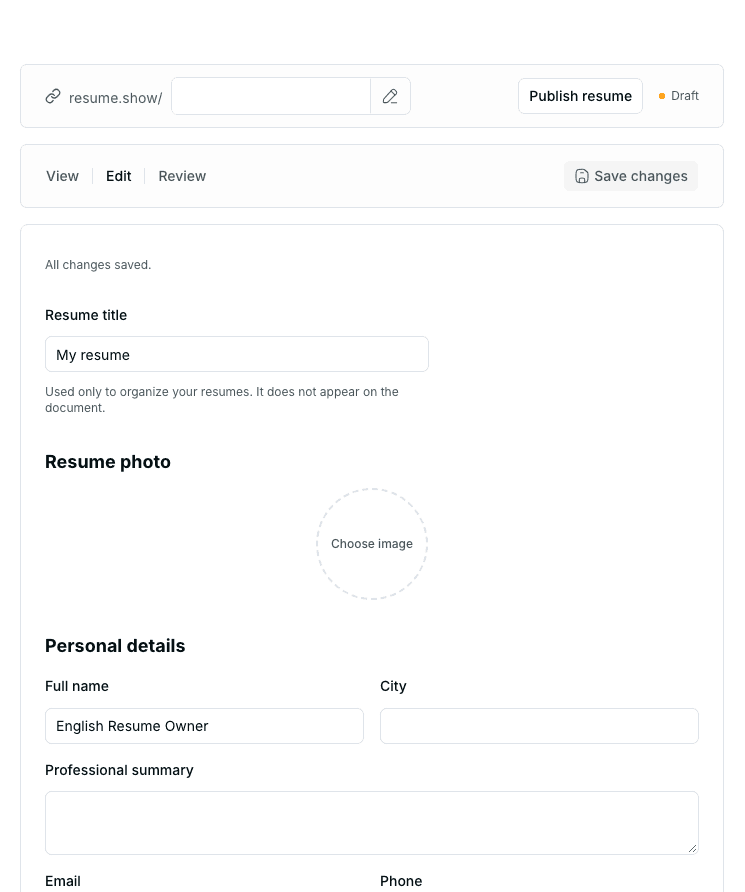
Your resume is often an employer's first introduction to you. A professional resume can open the door to better opportunities. This article explains how to write one that presents your experience clearly and effectively.
Why does a professional resume matter?
Your resume represents you when you are not in the room. Employers often decide within the first ten seconds whether to look more closely. A clear, professional resume can therefore make a difference between rejection and an interview invitation.
The structure of a professional resume
1. Contact information
Place clear contact information at the top:
- Full name
- Phone number
- Professional email address
- LinkedIn profile, optional but recommended
- Portfolio or personal website, if available
2. Professional summary
Write two or three lines that briefly explain your experience and key skills. Your summary should:
- Be concise and engaging
- Highlight your main skills
- Show the value you could bring to the company
Example:
Frontend developer with five years of experience in React and TypeScript. Specializes in building modern, efficient interfaces, with experience working in large teams on complex projects.
3. Work experience
List positions in reverse chronological order, starting with the most recent. For each role, include:
- Company name
- Job title
- Start and end dates
- Measurable achievements, using numbers and percentages
Key point: Emphasize achievements and results rather than listing duties.
Weak example:
- Responsible for website development
Stronger example:
- Developed a website that helped increase online sales by 40%
4. Education
Include:
- University or institution
- Field of study
- Qualification
- Graduation year
- GPA, if it strengthens your application
5. Skills
Organize skills into useful categories:
- Technical skills
- Interpersonal skills
- Languages
- Certifications
6. Projects, if relevant
Include significant projects with links to GitHub or a project website.
Essential resume-writing tips
1. Tailor the resume to each position
Adapt each resume to the role you are applying for. Use relevant terms from the job description.
2. Use numbers and evidence
Replace vague claims with specific results:
- ❌ "Increased sales"
- ✅ "Increased sales by 35% over six months"
3. Choose strong action verbs
Use active, specific verbs:
- Developed
- Managed
- Improved
- Designed
- Implemented
4. Keep the length appropriate
Make the resume concise and useful:
- With fewer than five years of experience, aim for one page
- With more experience, two pages may be appropriate
5. Check formatting and design
- Use readable fonts
- Leave enough space between sections
- Choose professional colors
- Save the resume as a PDF
Common mistakes to avoid
- Spelling and grammar errors: Review the resume several times.
- Unnecessary personal information: Avoid adding a photograph, age, or marital status.
- Excessive length: Remove information that does not help the application.
- Complicated templates: Prefer simplicity.
- Dishonesty: Be truthful throughout.
Conclusion
Writing a professional resume takes time and care. Applying these principles and tailoring the document to each position can improve how well it supports an interview invitation.
Treat your resume as a living document. Update it regularly with new experience, skills, and achievements.
Related articles
Resume tips for job seekers: a practical guide
Practical advice for writing an effective resume, presenting achievements, and helping employers understand your suitability for a role.
Preparing a resume PDF for import and troubleshooting
Check PDF text, passwords, scans, and layout before importing, then compare the structured draft with your original resume section by section.
Translating a resume into English: a meaning and review checklist
Check job titles, dates, official names, verb tense, terminology, and layout before and after translating your resume.